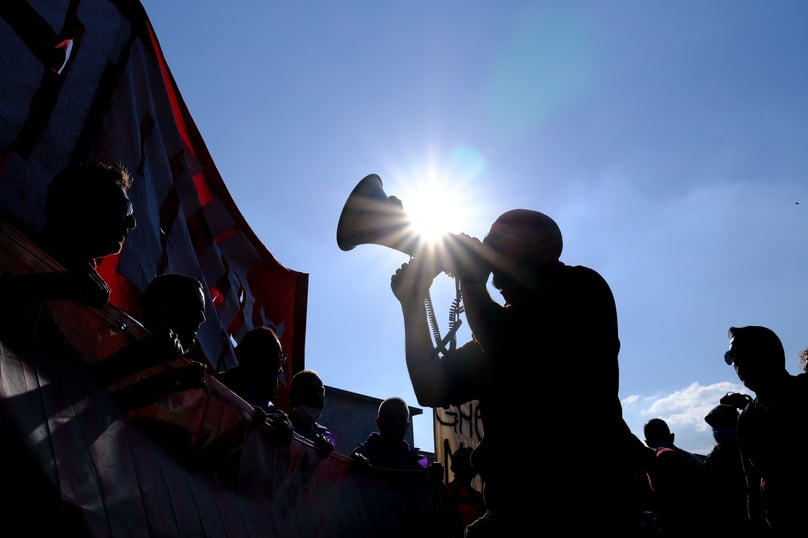
Nationwide, workers are demanding a living wage, driven in part by frustration over soaring CEO compensation. This dissatisfaction bridges industries, from Hollywood to Detroit, as regular wage-earners see their paychecks stagnate or shrink against inflation, even as executive salaries skyrocket.
This glaring wage disparity has been growing for years. A report from the Economic Policy Institute reveals that since 1978, CEO pay at 300 of America's largest companies has increased 1,460%, adjusted for inflation, while the typical worker's pay has risen just 18%. Furthermore, CEO compensation has outpaced the stock market growth by 37%.
One of the industries where this disparities take sharp focus is the US auto industry. During the 2008 industry collapse, union workers willingly sacrificed wage increases and certain benefits to save the industry. However, over the past years, the average hourly wage in car manufacturing has dropped about 19% when adjusted for inflation.
In contrast, CEO pay at Detroit's Big Three automakers - GM, Ford, Chrysler (now owned by Stellantis) - has surged by an average 40%. This rise is close to the wage increase demanded by the striking workers.
For instance, GM CEO Mary Barra, earned $29 million last year, a 34% increase over four years. Part of her defense for her compensation is that 92% is performance-based. However, critics argue that such metrics are subjective and can be skewed in favor of company profits at workers' expense.
The other Big Three executives also saw massive pay raises. Stellantis’ CEO Carlos Tavares earned $24.8 million, a 22% increase from the previous year. Ford's CEO Jim Farley's $21 million pay nearly doubled since he took the role in 2020.
It mirrors the situation in Hollywood, where top executives' average pay rose to $28 million in 2021, up by 53% since 2018. The Writers Guild of America asserts the median pay for screenwriters has dwindled by 14% in the past five years, when adjusted for inflation.
Union workers, according to UAW President Shawn Fain, simply want pay increases in line with the companies’ performance in recent years. Average car prices have escalated by 30%, CEO pay by 40%, but workers' demand for a fairer wage share faces scrutiny.
With a projected $32 billion in profit this year, the Big Three automakers contend these are necessary to finance the industry's shift to electric vehicles (EVs), expected to be a more profitable and environment-friendly path. However, union leaders fear that manufacturing may shift to non-union states.
Adam S. Hersh, a senior economist at EPI, suggests a quick resolution to these negotiations, equitably distributing the profits between EV investments, workers' pay, and maintaining healthy company profits. This would show the real value of the workers' labor, particularly in the face of competition from foreign producers.