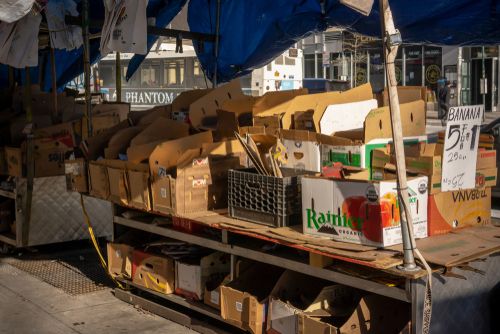
Tensions are escalating in New York City as local supermarket chains and street fruit vendors engage in a heated dispute. Grocery stores, such as Morton Williams and Gristedes, are lobbying city health and sanitation officials for more stringent enforcement and regulation of street vendors, claiming unfair advantages due to differing rules. Vendors, however, argue they are being made scapegoats by supermarkets attempting to recover from the impact of COVID.
Lobbyist Richard Lipsky, in early June, urged the Department of Health to implement a stronger enforcement plan against street vendors. Lipsky cited allegations of health code violations at various produce stands from a 2021 industry report. Supermarket owners contend that their shops are harmed by the disparity in regulations and overhead costs, including rent, insurance, taxes, and electricity bills, while street vendors merely need a city permit.
Notably, supermarkets and street vendors are governed by separate health codes - the state oversees grocery stores, and the city manages street vendors. Lipsky's request for increased enforcement underscores the difficulties faced by supermarkets and bodegas as they grapple with the aftermath of the pandemic and the ongoing issue of shoplifting.
Carlos Collado, who owns two Fine Fare supermarkets in the Bronx, claims that the proliferation of produce vendors near his stores has resulted in lost customers and business. He argues that the unrestricted presence of vendors near his entrances is inequitable. On the other side, vendors maintain that their stands adhere to cleanliness standards, comply with inspections, and offer affordable produce to the shoppers who rely on them. The program permitting these vendors to operate is designed to expand access to fresh produce for New York's low-income households.
Mohamed Attia, managing director of the Street Vendor Project, accuses supermarkets of scapegoating vendors rather than addressing their internal issues. Customers also express doubt over health code concerns raised by supermarkets, noting the affordability of fruit stands in comparison.
The longstanding tensions between supermarkets and street vendors have persisted for decades, and the Department of Sanitation's recent takeover of street vendor enforcement may present new opportunities for consensus. The Department of Health emphasizes that street vendors must follow certain rules, undergo inspections, and achieve compliance as required.
Charles Platkin, a professor at Hunter College and board member of the NYC Food Policy Center, suggests that the distinct codes governing supermarkets and street vendors serve different objectives. He sees the ongoing debate in a positive light, noting that the increased availability of produce aligns with public health and city goals.